The Origin of the “Reach Penalty” Myth
The idea that bought followers hurt reach did not come from Facebook policy statements. It emerged from pattern observation, incomplete data, and misattribution.
Correlation vs Causation
Many pages notice a reach decline after adding followers and assume the two events are directly connected. In reality, both events often happen during periods of transition—new content strategies, inconsistent posting, or declining engagement quality.
Facebook does not penalize pages for growth. It adjusts distribution based on performance signals. When reach drops, it is usually because posts are underperforming relative to the audience—not because of how that audience was acquired.
Misinterpreted Case Examples
Online forums frequently share anecdotal “proof” that buying followers kills reach. These examples often ignore key variables: inactive pages, content fatigue, sudden posting changes, or unrealistic expectations about immediate engagement.
Without controlled comparison, these stories reinforce fear rather than explain outcomes.
How Facebook Organic Reach Works in 2026
To understand reach outcomes, it’s necessary to understand how Facebook distributes content today.
Distribution vs Amplification
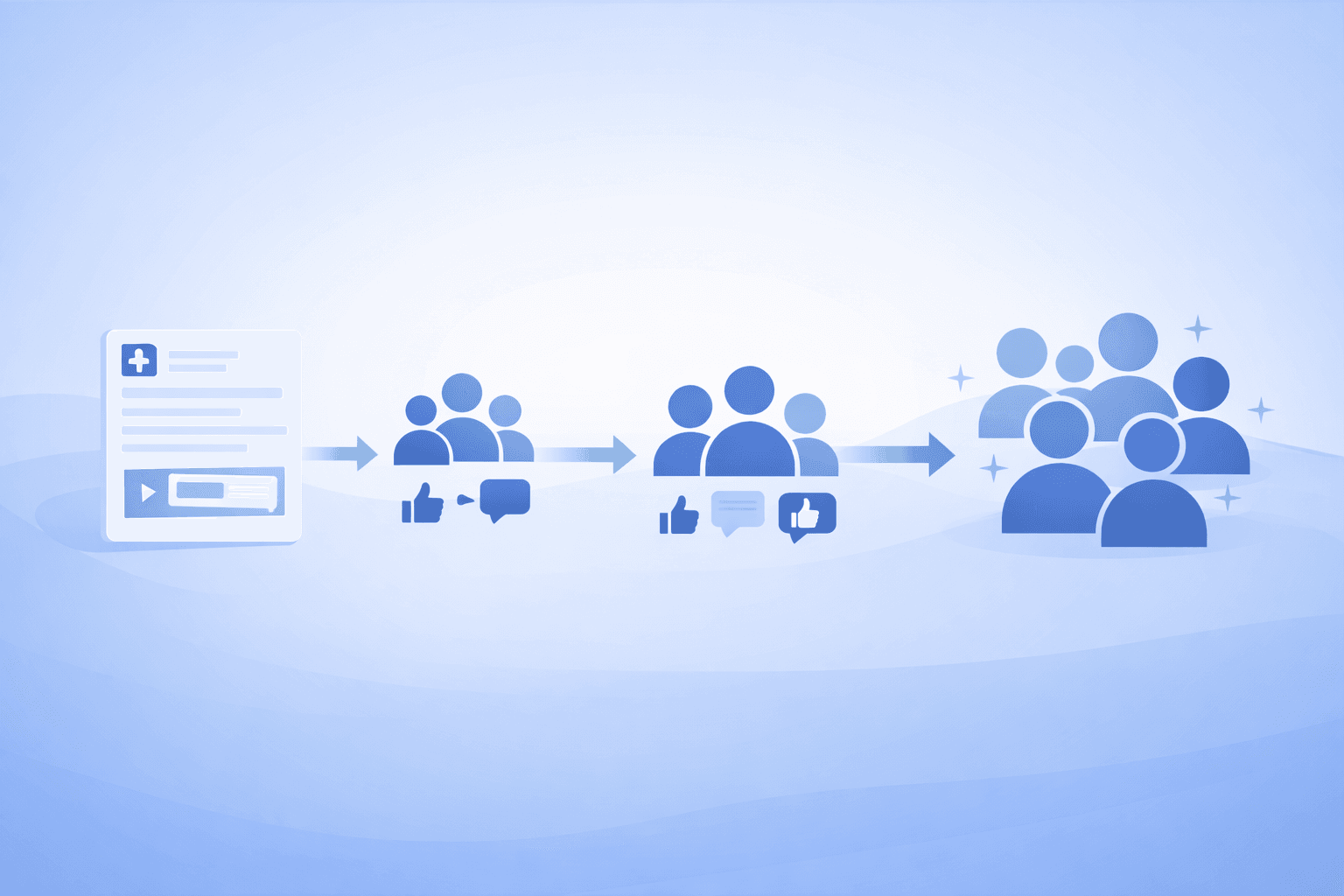
Facebook’s system operates in two stages. First, content is distributed to a small sample of followers. If early engagement signals are positive, the system amplifies reach to a wider portion of the audience.
Follower count determines potential reach, not guaranteed reach. Distribution is conditional, not automatic.
The Role of Early Engagement
Early reactions, comments, watch time, and dwell time heavily influence whether posts continue to spread. Pages with more followers but weaker engagement may see lower average reach per post.
This dynamic explains why pages experimenting with Facebook page follower growth strategies sometimes misinterpret algorithm behavior. Growth changes the audience baseline, not the ranking logic.
Engagement Quality vs Follower Source
One of the most important distinctions Facebook makes is not where followers came from, but how content performs after publishing.
What Happens When Followers Are Passive
Pages with large numbers of passive followers may see lower engagement rates on individual posts. This does not trigger penalties—it simply limits amplification.
Reach becomes more selective, not punitive.
What Happens When Engagement Is Consistent
Pages that maintain consistent posting schedules and engagement patterns tend to stabilize quickly, even after follower increases.
Consistency signals reliability to the algorithm. Follower origin is secondary.
Reach Patterns Before and After Follower Increases
When followers are added, reach patterns often shift temporarily before normalizing.
Short-Term Effects
In the short term, engagement rates may fluctuate. New followers may not interact immediately, and Facebook tests content performance across a broader audience.
This phase often leads to misinterpretation. Pages expect higher reach instantly and assume suppression when results don’t match expectations.
Real-world data summarized in real outcome data over time shows that these early fluctuations are normal.
Medium-Term Normalization
As posting continues, Facebook recalibrates distribution based on actual engagement behavior. Pages that remain active typically see reach stabilize within weeks.
At this stage, content quality becomes the dominant factor again.
When Reach Drops (And Why It’s Not the Followers)
Reach declines are common—but rarely caused by follower acquisition itself.
Content Fatigue
Repeated content formats, recycled messaging, or declining relevance can reduce engagement signals. The algorithm responds by limiting distribution.
Posting Inconsistency
Irregular posting disrupts audience expectations and engagement momentum. Pages that pause activity after growth often experience reach drops unrelated to followers.
These patterns explain why blaming followers often misdiagnoses the real issue.
What Actually Protects Organic Reach
Facebook rewards stability, relevance, and engagement—not growth purity.
- Consistent posting schedules
- Content aligned with audience expectations
- Gradual engagement normalization
- Audience-appropriate formats
For a deeper comparison of delivery styles, see retention-focused follower strategies and how they influence long-term reach consistency.
When Doing Nothing Is the Better Choice
Not every page needs accelerated growth. Pages with strong engagement but limited resources may benefit more from refining content before expanding audience size.
Waiting allows engagement patterns to strengthen organically, which can improve
amplification later. For pages that do choose to grow, retention-focused follower options paired with
content discipline tend to produce the most stable outcomes.
Final Takeaway
Facebook does not punish pages for follower growth. It responds to how audiences interact with content. Reach drops usually signal engagement issues—not algorithmic penalties tied to followers.
Pages that understand this distinction avoid panic, adjust strategy intelligently, and maintain long-term visibility without unnecessary risk.