Short Answer
Is It Safe to Buy YouTube Views in 2026?
Yes
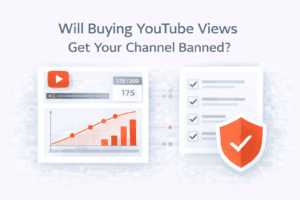
buying YouTube views can be safe in 2026. However, it is not universally safe, and it is never risk-free if used incorrectly.
YouTube does not operate on a simplistic rule such as “paid views equal punishment.” Instead, it evaluates patterns across time. A channel that occasionally receives external or paid traffic but maintains consistent viewer behavior is treated very differently from a channel that repeatedly injects abnormal spikes with no supporting engagement.
The creators who run into problems are usually not punished for buying views — they are punished for creating patterns that contradict normal viewer behavior. Understanding that distinction is critical.
Why the “Buying Views Is Dangerous” Narrative Persists
The belief that buying YouTube views is inherently dangerous comes from three sources:
- Outdated algorithm assumptions
- Low-quality providers from earlier years
- Creators attempting to game monetization systems
Before YouTube’s modern behavior-based evaluation systems, large volumes of bot traffic could distort metrics more easily. That era is largely gone. Today, YouTube isolates view counting from monetization and recommendation logic far more effectively.
What remains dangerous is not buying views — it is attempting to manipulate outcomes that views were never designed to control.
What YouTube Actually Evaluates in 2026
To understand safety, you must understand what YouTube pays attention to.
Views are recorded, not trusted blindly
YouTube counts views because they represent interest. However, view count alone does not determine whether a video deserves distribution. A video with high views but poor engagement does not gain algorithmic preference simply because the number is large.
Viewer behavior matters more than source
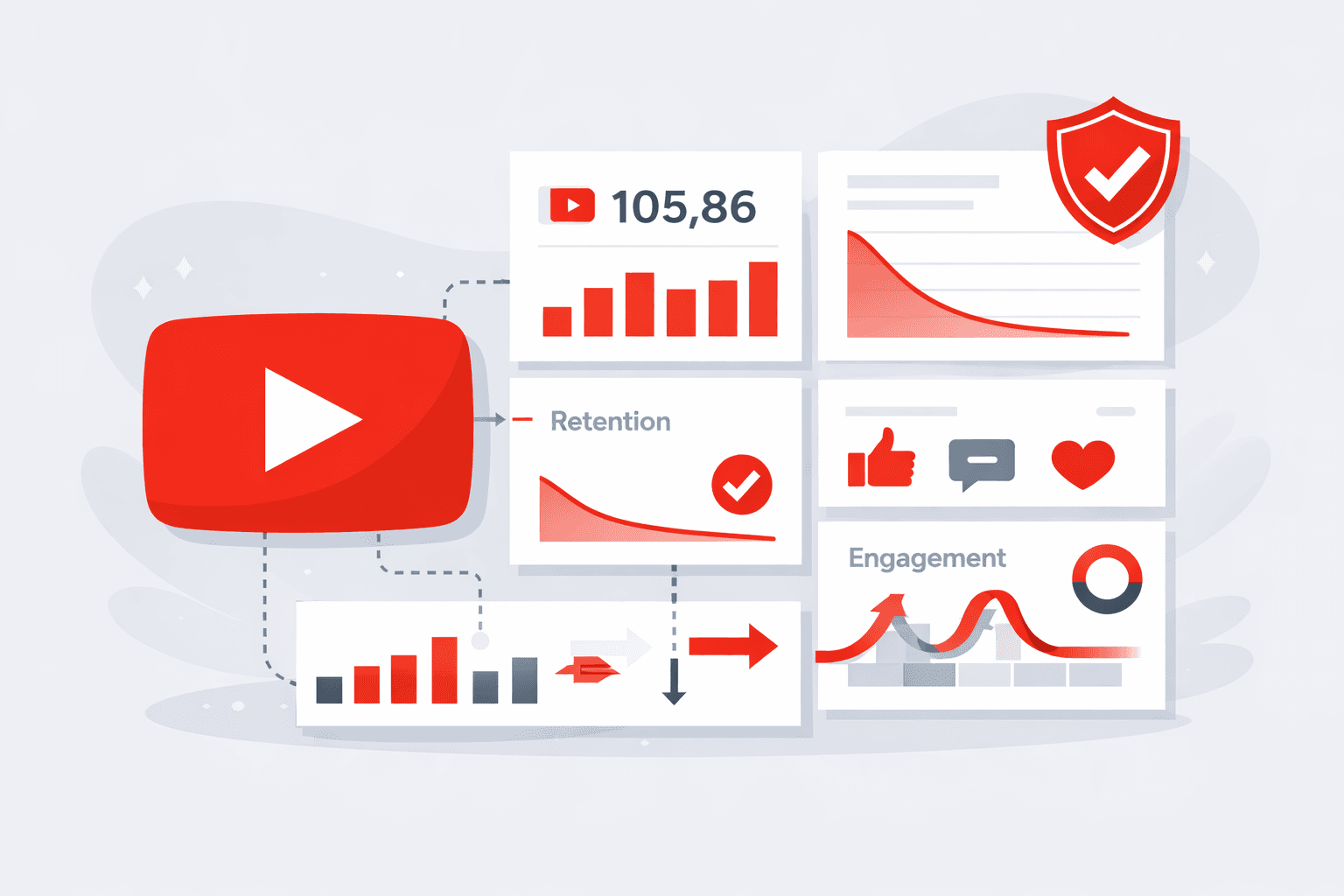
YouTube evaluates what happens after a view is registered:
- How long the viewer stays
- Whether they interact
- If they continue watching other videos
- Whether the session ends abruptly
This is why external traffic, paid traffic, and organic traffic are not treated as inherently suspicious. What matters is whether behavior aligns with normal usage patterns.
YouTube does not punish views — it ignores bad signals
If purchased views do not behave well, YouTube typically responds by reducing distribution rather than penalizing the channel. In other words, bad views usually result in no benefit, not punishment.
The 7 Factors That Determine Whether Buying Views Is Safe
Safety is determined by context. These seven factors collectively decide whether buying YouTube views supports your channel or creates risk.
1. Delivery Speed and Timing
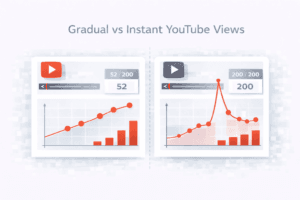
Gradual delivery mirrors organic discovery. Sudden spikes without external explanation create abnormal traffic graphs. In 2026, unnatural acceleration is easier to detect than gradual support.
2. Content Readiness
Buying views for a poorly optimized video magnifies weak signals. Strong thumbnails, compelling titles, and early engagement are prerequisites, not optional extras.
3. Retention Compatibility
YouTube expects viewers to behave in line with video length and format. Purchased views that exit immediately distort retention curves and undermine trust.
4. Engagement Ratio Stability
Engagement does not need to be high, but it must be consistent. Extreme mismatches between views and interaction over time create analytical anomalies.
5. Channel History and Trust
Established channels with consistent uploads absorb external views naturally. Dormant or erratic channels do not.
6. Pattern Consistency
Occasional support is normal. Repetitive artificial boosts on every upload are not. YouTube evaluates trends, not single events.
7. Volume Realism
Scaling must align with channel size. Buying tens of thousands of views for a channel that normally receives a few hundred creates obvious distortion.
Unsafe Scenarios That Create Real Risk
Buying YouTube views becomes risky when used to compensate for structural problems.
- Channels with no upload consistency
- Videos with extremely low CTR
- Repeated bulk boosts on monetized videos
- Combining views with fake subscribers
- Attempting to manipulate ad revenue
In these cases, views do not fix the problem — they expose it.
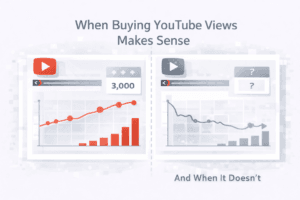
When Buying YouTube Views Is a Legitimate Strategy
When used correctly, views function as a stabilizing signal rather than a growth hack.
Safe and legitimate use cases include:
- Supporting launch momentum for strong content
- Enhancing social proof for external audiences
- Testing Shorts visibility patterns
- Reducing early-stage volatility
In these scenarios, views reinforce existing audience interest instead of replacing it.
Real vs Fake Views: Why Quality Determines Safety
Not all views behave the same, and YouTube recognizes this.
Low-quality views typically show:
- Immediate exits
- No continuation into session viewing
- No engagement footprint
Higher-quality views blend into analytics naturally because they resemble genuine user behavior. This distinction is critical for long-term safety.
Price alone is never a reliable indicator of quality. In many cases, the cheapest views create the most expensive damage.
How to Buy YouTube Views Safely in 2026
Safety comes from preparation and restraint.
- Optimize content before purchasing views
- Choose gradual delivery
- Start with modest volumes
- Monitor retention and engagement
- Avoid stacking growth tactics
- Allow organic traffic to continue naturally
Views should support momentum, not fabricate it.
Buying Views Is a Tool, Not a Growth Strategy
The most successful creators understand that buying views does not create success — it supports it.
YouTube rewards consistency, audience satisfaction, and long-term trust. Views can help a video reach more people, but what happens after exposure determines everything.
Used responsibly, buying YouTube views in 2026 can be safe. Used irresponsibly, it becomes a liability.
If your content already resonates with viewers, using
real YouTube views with gradual delivery can help stabilize early momentum without interfering with how YouTube evaluates performance.