The 200–300 View Plateau Explained
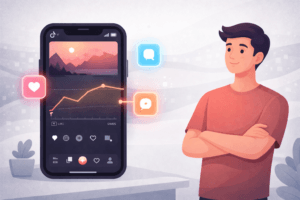
TikTok does not push every video to the same audience size.
Instead, each video goes through a controlled distribution test.
For most accounts, that initial test reaches:
A small group of users
Often aligned with your recent audience or inferred niche
Typically resulting in 200–300 views
This number isn’t a limit — it’s a checkpoint.
TikTok is essentially asking:
“Does this content earn enough engagement to deserve wider exposure?”
If the answer is unclear or negative, the video pauses at that level.
Why This Number Appears So Consistently
Creators often assume:
“TikTok hates my account”
“I’m shadowbanned”
“The algorithm changed again”
In reality, the same view range appears repeatedly because:
The test batch size is similar across accounts
The engagement thresholds are consistent
Most videos fail to cross the same early metrics
This is why thousands of creators report:
“Every video stops at 250 views no matter what I post.”
It’s not punishment — it’s evaluation.
It’s Not a Shadowban
(And Here’s Why)
Shadowbans do exist — but they are rare and specific.
A true shadowban usually includes:
Zero reach across multiple posts
No exposure on For You at all
Sudden, total collapse of visibility
Often tied to violations or spam behavior
The 200–300 view stall is different:
Your video was shown
It was tested
It simply didn’t pass the next threshold
Calling this a shadowban is like calling a failed audition a blacklist.
What TikTok Actually Evaluates in Early Distribution
TikTok does not rely on one signal. It evaluates patterns.
Here’s what matters in the early stage:
Watch Time
(Primary Signal)
How long people stay
Whether they watch past the first few seconds
Whether they reach the end
Replays
Signals curiosity or value
Especially strong for short clips
Saves
Indicates long-term usefulness
Strong for educational or list-style content
Shares
Indicates emotional or social relevance
Likes
(Confirmation Signal)
Likes are not the most powerful metric, but they are important.
They act as:
A confirmation signal
A fast, low-effort indicator of approval
A reinforcement when other metrics are borderline
Think of likes as the difference between:
“This might be okay”
and
“Yes, this resonates.”
Why Good Content Still Gets Stuck
Many creators assume:
“If the content is good, TikTok will push it.”
That’s only partially true.
Good content can still stall if:
The Initial Engagement Velocity Is Too Weak
TikTok cares about how fast engagement happens, not just how much.
A video with:
10 likes in the first 10 minutes
often performs better than50 likes spread across several hours
The Hook Attracts the Wrong Audience
If the first viewers:
Don’t fully match your niche
Don’t care deeply about the topic
Scroll without interacting
The test fails — even if the content is objectively good.
Your Profile Trust Is Still Developing
New or inconsistent accounts:
Have weaker trust signals
Require stronger engagement to pass tests
Face higher scrutiny early on
This is where engagement signals become more important.
How Likes Help Break the Visibility Ceiling
(Without Faking Virality)
Likes do not “trick” TikTok.
They support a decision TikTok is already considering.
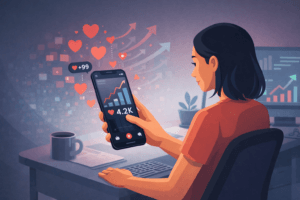
When a video is on the edge — decent watch time, okay retention — likes can:
Tip the balance
Increase confidence in the content
Push the video into a larger test batch
This is why creators often notice:
“The moment likes picked up, views started climbing.”
It’s not magic. It’s reinforcement.
Creators who want to understand this mechanism more deeply usually explore how TikTok likes influence early distribution signals, especially when paired with strong hooks and watch time.
Timing Matters More Than Quantity
A common mistake is assuming:
“More likes = better results”
In reality:
Early likes > late likes
Gradual likes > sudden spikes
Aligned likes > random engagement
A video receiving:
A steady stream of likes during the first testing window
is far healthier thanA sudden dump of engagement hours later
TikTok evaluates natural behavior patterns.
When Likes Won’t Help
(Important Reality Check)
Likes cannot save:
A weak hook
Confusing visuals
Mismatched captions
Irrelevant content
If people:
Don’t watch
Don’t stay
Don’t care
Likes alone won’t push the video.
This is why creators who rely only on engagement manipulation often see:
Short-term bumps
Long-term stagnation
Likes amplify existing demand — they do not create it.
Why Some Creators Break the Plateau Repeatedly
You may notice some accounts:
Regularly pass the 300-view mark
Even with average content
Even without “viral” ideas
This usually comes down to:
Profile trust
Audience alignment
Consistent engagement behavior
TikTok learns:
“This creator’s content is usually worth expanding.”
Likes contribute to that reputation over time.
A Smarter Way to Use Likes as a Testing Tool
Instead of thinking:
“I need likes to go viral”
Think:
“I need confirmation to test my content direction”
Creators use likes effectively when they:
Compare similar videos with different hooks
Observe which ones pass early thresholds
Adjust content strategy accordingly
Likes become a diagnostic tool, not a shortcut.
The Visibility Ceiling Is Psychological Too
The 200–300 view stall:
Frustrates creators
Causes overposting or deleting videos
Leads to chasing myths
Understanding that this is a systematic checkpoint, not a rejection, helps creators:
Stay consistent
Test smarter
Focus on signals that matter
Final Takeaway
Likes Don’t Create Demand — They Reveal It
TikTok does not reward hacks.
It rewards:
Signals
Patterns
Reinforced decisions
Likes:
Do not replace good content
Do not guarantee reach
Do help TikTok decide faster
Breaking the 200–300 view ceiling isn’t about tricking the algorithm — it’s about aligning with how it evaluates value.
When your content earns attention and receives early confirmation, TikTok does what it’s designed to do:
push what works.