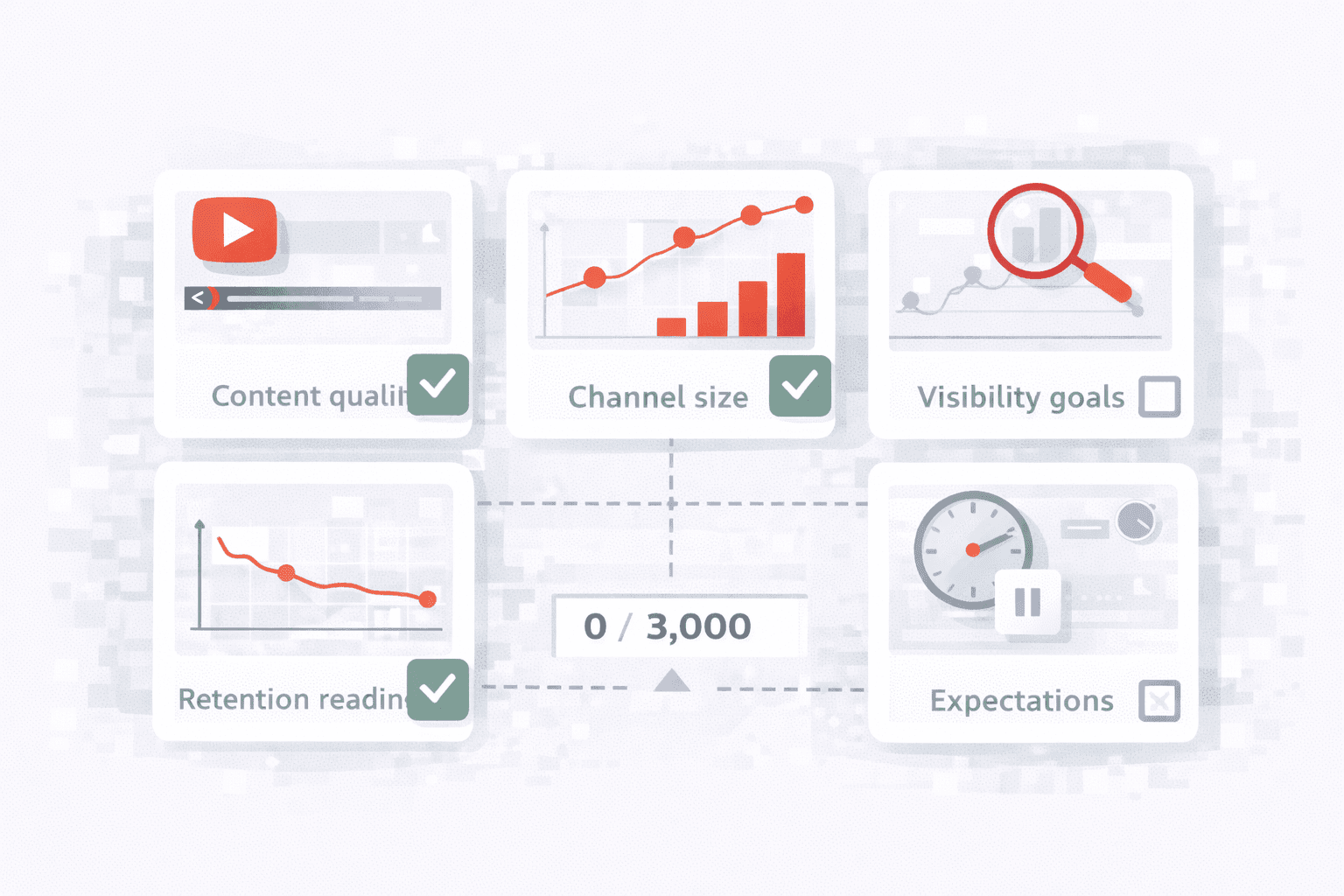
Why Buying YouTube Views Is Not a Universal Strategy
One of the biggest mistakes creators make is treating YouTube views as a universal growth solution. YouTube does not work that way.
Different channels have different needs:
- A new channel with no audience
- An established channel launching a new series
- A brand campaign tied to external promotion
- A creator focused on monetization
Each scenario has different goals, risks, and expectations. Buying views without understanding context often leads to disappointment because creators expect outcomes views were never meant to deliver.
Views are a visibility metric, not a growth engine.
Situations Where Buying YouTube Views Makes Sense
Buying YouTube views can make sense when the goal is visibility, validation, or distribution support — not algorithm manipulation.
Launching a New Video With No Initial Exposure
New uploads often struggle to gain early momentum, especially on small or new channels. A modest number of views can help a video avoid appearing completely inactive during its initial exposure window.
This does not force YouTube to promote the video, but it can improve first impressions for human viewers.
Supporting External Promotion
When traffic is driven from external sources such as social media, websites, or email campaigns, buying views can help align YouTube analytics with off-platform exposure.
This creates consistency between perceived reach and actual promotion.
Social Proof for Brand or Client Campaigns
Brands, agencies, and creators working with clients sometimes need videos to reflect a minimum level of visibility. In these cases, views are used to meet presentation expectations rather than to manipulate performance.
Testing Thumbnails, Hooks, or Formats
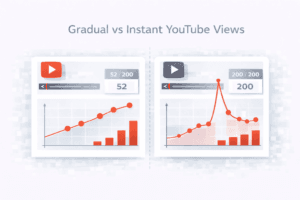
Creators experimenting with thumbnails, titles, or video formats may use views to gather early retention data. This is most effective when view delivery is gradual and aligned with normal audience size.
Reactivating Dormant Channels
Channels returning after long inactivity sometimes use views to reintroduce content and regain visibility while rebuilding organic engagement.
When Buying YouTube Views Does NOT Make Sense
Buying views becomes harmful when expectations are misaligned with reality.
Expecting Algorithmic Promotion
YouTube does not boost videos simply because they have more views. Retention, watch time, and viewer satisfaction matter far more.
Trying to Shortcut Monetization
Views do not equal earnings. Buying views to increase ad revenue rarely works and can confuse performance metrics.
Low-Quality or Unfinished Content
If content does not hold attention organically, adding views often exposes the weakness rather than fixing it.
Repeated Large-Scale Usage
Using large volumes of views repeatedly can distort analytics patterns and reduce trust in performance signals.
Ignoring Retention Issues
When retention is already poor, buying views can make the problem more visible.
Buying Views for New Channels: Smart or Risky?
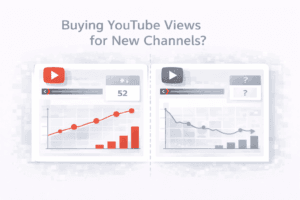
For new channels, buying views can be either neutral or risky depending on scale and intent.
Smart usage involves:
- Very small volumes
- Gradual delivery
- Clear visibility goals
Risky usage involves:
- Large spikes relative to channel size
- Expecting growth without audience development
- Ignoring content quality
For new creators, views should never replace learning content fundamentals.
Buying Views vs Organic Growth: The Real Relationship
Buying views and organic growth are not opposites. They serve different purposes.
Organic growth comes from:
- Strong content
- Audience satisfaction
- Consistency
Bought views can support:
- Visibility
- Presentation
- Distribution alignment
Views cannot replace content quality, but they can complement a broader strategy when used responsibly.
How Buying Views Can Hurt Performance (If Misused)
Problems arise when views are used without strategy.
Retention Distortion
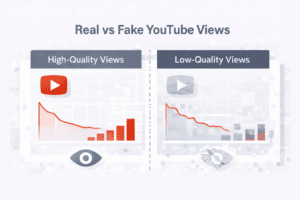
Low-quality views can flatten retention curves, signaling dissatisfaction.
Analytics Noise
Sudden spikes can make it harder to interpret real audience behavior.
Pattern Inconsistency
Repeated unnatural traffic can reduce confidence in signals.
False Feedback
Creators may misjudge content quality based on inflated numbers.
How to Decide If Buying Views Is Right for You
Before buying views, ask yourself:
- What is my primary goal?
- Is my content already watchable?
- Am I scaling views realistically?
- Do I understand the risks?
- Can I accept neutral outcomes?
If views are meant to support visibility rather than guarantee growth, they are more likely to fit your strategy.
Internal Bridge and Practical Context
Buying views works best when treated as a controlled exposure tool rather than a shortcut.
Creators who choose to buy YouTube views responsibly often use them to support launches, campaigns, or visibility — not to replace audience building or content quality.
Key Takeaways
- Buying views is context-dependent
- Views support visibility, not growth guarantees
- Misuse can distort analytics
- Quality and intent matter more than volume
- Strategy determines outcomes
In 2026, buying YouTube views is neither a magic solution nor a guaranteed mistake. It is a tool — and like any tool, its value depends on how and why it is used.