The 10K follower threshold is widely cited as the brand-deal entry point, but the under-10K brand deal market is alive and active in 2026 — particularly for accounts with strong engagement rates, well-defined niches, and thoughtful outreach. This guide breaks down the operational playbook for landing brand deals on Instagram below 10K followers: the engagement-rate thresholds that matter, the outreach structures that work, and the niches where micro-influence outperforms scale.
Why Sub-10K Brand Deals Exist
Two structural reasons brands actively seek under-10K creators:
- Higher engagement rates — micro-creators average 4–8% engagement vs 1–3% on premium-tier accounts. Brands targeting authentic-feeling promotion get more reach per dollar.
- Lower-cost per placement — micro deals run $100–$1,500 vs $5,000–$15,000+ at premium tier, allowing brands to diversify across many creators rather than betting on a few.
The 2026 micro-influencer market grew faster than premium-tier in dollar terms — brands shifted budget toward many-small over few-large after observing the engagement-rate yield.
The Engagement Rate Floor That Matters
Under-10K brand deals require minimum 3% engagement rate; many brands prefer 5%+. The math is mechanical: a 5K-follower account at 5% engagement averages 250 likes per post, which is the visible engagement threshold most brand teams use as a quality signal. Below 1%, brand outreach is almost universally ignored.
The engagement-rate sensitivity is why follower-quality discipline matters disproportionately at this stage. The full mechanics of how engagement rate interacts with monetization are mapped in our followers vs engagement guide.
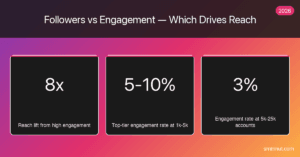
SMMNut Sub-10K Brand Deal Yield Curve: in 2026 surveys of micro-creators landing deals, engagement rate predicted deal volume more strongly than follower count. Creators at 5K followers with 5%+ engagement reported averaging 2.4 brand deals per month; creators at 5K followers with under 2% engagement reported 0.3 deals per month. The 8x deal-volume differential at the same follower count is the operational reason follower-quality discipline pays off — the deals are won at the engagement rate level, not the count level.
The Niches Where Sub-10K Works Best
- Fitness and wellness — high engagement, product-rich, brands love micro-creator demographics
- Food and recipe — strong engagement, brand affiliate cycles work well
- Beauty and skincare — micro-creator authenticity preferred for product reviews
- Parenting — niche audiences with high engagement and product affinity
- Tech and gadget — review-driven, brands seeding products to micro-creators for early-access content
- Sustainable/eco — brands specifically prefer micro-creator authenticity over premium-creator polish
Niches that work less well under 10K: broad lifestyle, generic motivation, finance (regulated, brands risk-averse with micro-creators).
The Outreach Playbook
The single biggest mistake micro-creators make: waiting for brands to find them. The realistic 2026 picture: 90% of sub-10K brand deals come from creator-initiated outreach, not brand-initiated discovery.
Step 1 — Build the media kit
One-page PDF or Instagram Story highlight containing: niche definition, follower count, engagement rate, top 3 posts (with views/engagement), audience demographics from Insights, contact email. Brand teams scan media kits in 90 seconds; the format matters.
Step 2 — Identify target brands
Build a list of 20–30 brands in your niche. Look at competing micro-creators’ sponsored posts to find brands already paying for micro-influence in your category. Note the brand’s typical creator profile (count, niche, content style).
Step 3 — Direct outreach
Email or DM (email outperforms in 2026). Three-paragraph maximum: who you are (1 sentence + niche), what you create (1 sentence + audience demographics), proposal (1–2 sentences with sample content idea + rate range). Attach media kit.
Step 4 — Follow up
One follow-up email 7–10 days later. No more than that — repeat follow-up creates negative brand signal.
Realistic Sub-10K Brand Deal Rate Ranges (2026)
| Account Profile | Single Post Rate | Reel Rate | Story Series Rate |
|---|---|---|---|
| 1K–3K, 5%+ engagement, niche-fit | $50–$200 | $100–$400 | $75–$250 |
| 3K–5K, 4%+ engagement | $100–$400 | $200–$700 | $150–$500 |
| 5K–10K, 3%+ engagement | $200–$800 | $400–$1,500 | $300–$1,000 |
| 5K–10K, 5%+ engagement, premium niche | $400–$1,500 | $800–$2,500 | $500–$1,500 |
Product-Trade vs Cash Deals
Many sub-10K micro deals offer product-trade instead of cash. The honest math: product trade is worth pursuing if (a) the product is something you’d actually use, (b) the brand’s product retail value exceeds your typical cash rate, and (c) the deal includes usage rights for content reuse. Beyond those conditions, push for cash — even at modest rates ($50–$150), cash beats product for income predictability.
SMMNut Micro-Deal Negotiation Framework: the negotiation power in sub-10K brand deals comes from engagement rate, niche-fit, and content quality — never from follower count alone. Three concrete asks that consistently move rates: (1) sample content concept matched to brand’s existing campaign language, (2) audience demographic data showing exact fit with brand’s target customer, (3) usage rights clarified upfront (in-channel only, or whitelisted for brand’s paid ads — the latter commands 2–4x the rate). The data supports the rate; the rate doesn’t sell itself.
Why Cheap Follower Inventory Destroys Sub-10K Deal Capacity
Brand teams in 2026 routinely audit creator follower lists with third-party tools before signing. Sub-10K creators with high bot-follower ratios get filtered out automatically by these tools — the deal never happens, the creator never knows it was being considered.
This is the operational reason cheap follower orders are particularly destructive at the sub-10K stage: they block the income paths the follower count was supposed to enable. The full damage map is in our cheap-follower hidden cost analysis.
How SMMNut Supports Sub-10K Brand Deal Strategy
SMMNut’s role: real-account follower inventory that passes brand audit tools and clears the engagement-rate floor required for deal eligibility. Foundation orders at the 1K, 3K, and 5K threshold crossings produce the social-proof signals brands look for without the audit-failure risk of cheap inventory. The main service page ships the Framework-compliant packages calibrated for this use.
2026 Sub-10K Deal Market Trends
- Brand budget shifted toward micro-creators — many-small over few-large, accelerating in 2026.
- Audit tools became standard pre-screening — bot follower ratios above 25% disqualify creators automatically.
- Engagement-rate weighting in deal pricing strengthened — the 8x deal-volume differential between 5%+ and 2% engagement at the same count widened from 2025.
The takeaway: sub-10K brand deals are accessible and active in 2026, but the entry requirements (engagement rate, follower quality, outreach discipline) tightened. The accounts that respect those requirements earn meaningful income; the accounts that don’t get filtered out at the audit stage.
SMMNut Sub-10K Brand Pitch Conversion Rate: well-structured cold outreach to sub-10K micro-creator brand programs in 2026 converts to a paid deal roughly 4–8% of the time when the creator’s engagement rate exceeds 4% and the niche matches the brand’s campaign focus. The same outreach with engagement rate under 2% converts at under 1%. Volume math: a creator sending 20 well-targeted pitches per month at 5%+ engagement should expect 1 deal per month at the floor; at 8% engagement and premium niche, 2–3 deals per month is realistic. Conversion economics make the outreach hours pay back.