Why Content Format Is a Performance Variable in 2026
For a production-efficiency angle, see creating more content in less time.
TikTok’s For You Page algorithm does not distribute content based on how much effort went into it. It distributes content based on the engagement signals it generates in the first hour after posting. Different content formats consistently produce different engagement profiles — and those profiles determine which audiences TikTok shows the content to next.
A loop video drives rewatch signals. A hook + payoff video drives like and share signals. A niche tutorial drives follow signals. A mini-series drives return-viewer signals. Each of these matters to a different part of the algorithm’s scoring model, and choosing the wrong format for your current goal is one of the most common reasons accounts plateau despite consistent posting.
What the TikTok Algorithm Actually Measures
Before selecting a format, it helps to understand what the FYP algorithm weights most heavily. According to TikTok’s published documentation and creator research, the primary scoring signals are:
- Video completion rate — what percentage of viewers watched the full video
- Rewatch rate — how many viewers replayed the video at least once
- Like-to-view ratio — the percentage of viewers who liked the content
- Comment engagement — comment volume and the creator’s response rate
- Share rate — how often viewers sent the video to others
- Save rate — how often viewers bookmarked the content for later
- Follow-through rate — how often viewers followed the account after watching
Each content format in this guide is mapped to the signals it most reliably activates. Understanding that map is what separates creators who grow consistently from those who post without a growth logic.
The SMMNut Content Format Signal Map
The SMMNut Content Format Signal Map is a framework for matching TikTok content formats to their primary algorithmic outputs. Each format reliably activates one or two dominant engagement signals — and those signals determine which growth objective the format best serves. Using a format that activates the wrong signal for your current goal results in traffic that does not convert into followers, likes, or reach, regardless of content quality. The map below is derived from SMMNut’s analysis of content performance patterns across TikTok creator accounts in 2025–2026.
| Format | Primary Signal | Secondary Signal | Best For |
|---|---|---|---|
| Loop Content | Rewatch rate | Completion rate | FYP reach expansion |
| Hook + Payoff | Like rate | Share rate | Engagement quality |
| Mini-Series | Follow-through | Return viewer rate | Follower acquisition |
| Storytime / POV | Watch time | Comment rate | Longer content reach |
| Trend Remixing | Discovery reach | Share rate | New audience exposure |
| Niche Tutorials | Follow-through | Save rate | Qualified follower growth |
| Comment Reply | Re-engagement rate | Like rate | Community depth |
| Challenge Participation | Discovery reach | Share rate | Trend-driven exposure |
| Green Screen Reaction | Comment rate | Share rate | Authority building |
| High Retention Q&A | Save rate | Completion rate | Resource content |
| Algorithm Bait Clips | Completion rate | Rewatch rate | New account momentum |
| Behind-the-Scenes | Comment rate | Follow-through | Trust and retention |
| Transformation Format | Share rate | Save rate | Viral potential |
| Micro Case Study | Save rate | Share rate | Credibility and citations |
| Simulated Live Format | Comment rate | Like rate | Authentic engagement |
How to Choose the Right Format for Your Growth Goal
Selecting a content format should begin with your current growth objective, not your creative preference. The following framework maps growth goals to the formats most likely to achieve them in the shortest time.
Goal: Expand FYP Reach (More Views)
If your current priority is increasing raw view count and reaching new audiences, the formats that consistently generate the highest completion and rewatch signals are your best starting point. Loop content is the single most effective format for this goal — the seamless beginning-to-end design forces completion and triggers rewatches, both of which signal to TikTok that the content deserves wider distribution.
For creators who want to understand how purchased views interact with organic content format signals, TikTok views services work most effectively when the underlying content format already generates strong completion signals — giving the algorithm a quality baseline to amplify.
Goal: Increase Like Rate and Engagement Quality
Hook + Payoff and Storytime/POV formats consistently generate higher like rates than informational formats because they create an emotional payoff that viewers want to acknowledge. The specific mechanism is covered in detail in our Hook + Payoff strategy guide.
Goal: Grow Qualified Followers
Mini-Series and Niche Tutorials are the two formats with the highest follow-through rates. Mini-Series works because viewers follow to see the next installment. Niche Tutorials work because viewers identify the creator as a reliable information source for their specific interest. Both formats generate followers who are genuinely interested in the creator’s content — the type of follower who improves engagement ratios rather than diluting them.
For creators who want to accelerate their follower count while building this organic foundation, understanding how TikTok follower services interact with content strategy is essential — the format determines whether new followers stay engaged after acquisition. Accounts whose content generates qualified follow signals through Mini-Series or Niche Tutorial formats typically retain engagement ratios better after follower growth than accounts whose content does not naturally drive follow-through behaviour.
Goal: Build Algorithm Momentum for a New Account
New accounts face the cold-start problem — TikTok has no engagement history to use as a distribution reference. Algorithm engagement-trigger clips (short videos specifically structured for high completion and rewatch) are the most effective format for generating the fast, clear quality signals a new account needs. These clips work because TikTok’s seed audience scoring model responds to completion rate ratios, not absolute watch time — a 10-second clip with 95% completion generates a stronger distribution signal than a 60-second video with 60% completion. The underlying FYP mechanics and tier-by-tier distribution model are covered in detail in the TikTok algorithm guide.
The 15 Content Formats: What Each One Does and When to Use It
SMMNut’s Content Format Classification System organises TikTok’s content formats into five functional categories based on their primary algorithm output: Completion Drivers (loop, algorithm bait), Engagement Drivers (hook + payoff, comment reply, storytime), Follower Drivers (mini-series, niche tutorials, behind-the-scenes), Discovery Drivers (trend remixing, challenge participation, green screen reaction), and Authority Drivers (high retention Q&A, micro case study, transformation format, simulated live). Matching the format category to the growth objective eliminates the most common source of content strategy failure: posting consistently but targeting the wrong signal.
Completion Drivers
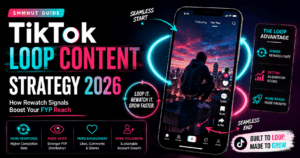
Loop Content — Creates a seamless video loop where the ending flows back into the beginning. Drives rewatch signals without requiring the viewer to make a conscious decision to replay. Detailed execution guide: TikTok Loop Content Strategy 2025.
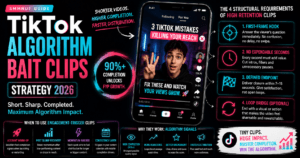
Algorithm Engagement-Trigger Clips — Short videos (under 15 seconds) optimised for 100% completion rate. These clips give the algorithm a fast, unambiguous quality signal by eliminating the drop-off variance that longer content carries. Most effective during account warm-up phases and after engagement declines. Detailed execution guide covering structural requirements, when to use them, and how they interact with purchased views: TikTok Algorithm Engagement-Trigger Clips 2026.
Engagement Drivers
Hook + Payoff — The two-part structure that captures attention in the first 2 seconds and delivers a satisfying resolution, generating likes and shares at higher rates than most other formats. Full execution guide: TikTok hook strategy.
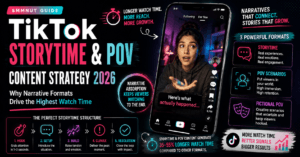
Storytime / POV — First-person narrative format that reduces psychological distance between creator and viewer, extending average watch time and increasing comment engagement.
Comment Reply — Turning viewer comments into video content. Re-engages the original commenter’s network and signals active community management to the algorithm.
Follower Drivers
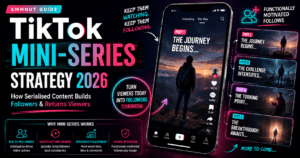
Mini-Series — Multi-part content that creates anticipation for the next installment, generating follow actions from viewers who want to stay updated.
Niche Tutorials — How-to content targeting a specific audience. Generates qualified follow-through from viewers who recognise the creator as a reliable source for their interest area.
Behind-the-Scenes — Process transparency content that builds parasocial trust, increasing follow-through and comment engagement from audiences who want access to the creator’s real workflow.
Discovery Drivers
Trend Remixing — Incorporating trending sounds, formats, or concepts into original content to borrow the existing audience assembled around that trend.
Challenge Participation — Engaging with active hashtag challenges to access TikTok’s grouped challenge discovery system.
Green Screen Reaction — Commentary on existing viral content using TikTok’s green screen effect, establishing topical authority while borrowing source content’s distribution.
Authority Drivers
High Retention Q&A — Question-and-answer format that sets viewer expectations in the first frame, reducing drop-off and increasing save rates for reference content.
Micro Case Study — Specific, measurable outcome content that generates saves and shares from viewers who want documented evidence for their own strategy decisions.
Transformation Format — Before and after content that combines curiosity and emotional payoff, generating the highest share rates of any format in this cluster.
Simulated Live-Style Content — Pre-recorded videos using live-stream aesthetic conventions (informal framing, no script, real-time energy) that generate comment rates comparable to actual live streams.
SMMNut Content Strategy and Growth Services Compatibility Framework: Content strategy and TikTok growth services are not alternatives — they are complementary inputs that compound each other’s effect through a specific mechanism. Content format determines the engagement signal quality the algorithm has to work with. Growth service delivery accelerates how quickly those signals reach the distribution threshold that triggers wider organic reach. A creator using a Completion Driver format (loop or engagement-trigger clip) generates a different algorithm response to purchased view delivery than a creator using no intentional format strategy. SMMNut’s delivery methodology is designed to preserve the engagement ratio that format quality establishes — not override it. The format is the foundation; the service amplifies what the format has already built.
How Content Strategy and Growth Services Work Together
A common misconception is that content strategy and growth services are alternatives — that a creator either works on content quality or uses a service to boost metrics. In practice, they are complementary inputs that compound each other’s effect.
Content format determines the quality signal the algorithm has to work with. Growth services accelerate how quickly that signal reaches the distribution threshold that triggers wider organic reach. A Loop Content video that already generates strong rewatch signals from its organic audience produces a different algorithm response when views are boosted than a low-engagement video receiving the same service. The format is the foundation; the service amplifies what the format has already established.
For creators evaluating how growth services interact with content format performance, SMMNut’s TikTok growth services are structured around delivery patterns that preserve the engagement ratios content format quality establishes — not override them.