
Understanding the two metrics
Follower count explained
Definition: The total number of accounts following your profile.
What it measures: Audience size, potential reach ceiling, and visible social proof.
Visibility: Public and prominent—typically the first metric profile visitors notice.
Growth timeline: Follower count can increase rapidly through multiple methods. Organic growth often lands around dozens to a few hundred followers per month under 5K, depending on content quality, posting frequency, and niche competition.
Platform features unlocked
- 10,000 followers: Link stickers in Stories (formerly “swipe-up”)
- 25,000+ followers: Increased consideration for verification eligibility (varies)
- 100,000+ followers: Access to additional creator programs/features (varies)
- 1,000,000+ followers: Higher probability of direct brand partnership outreach (varies)
Engagement rate explained
Definition: (Likes + comments + saves + shares) ÷ followers × 100
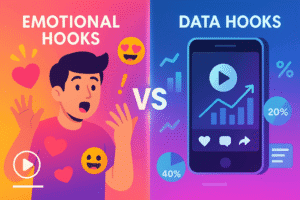
What it measures: How much your audience actually interacts with your content. Engagement is a resonance signal, not a vanity metric.
Visibility: Largely hidden. You can see it in Insights; others infer it from public post interactions.
Growth timeline: Engagement typically improves through consistent content quality and genuine community interaction and may take months to shift meaningfully.
Calculation example
Example post interactions
- 340 likes
- 28 comments
- 15 saves
- 7 shares
Total engagements: 390
Followers: 10,000
Engagement rate: 390 ÷ 10,000 × 100 = 3.9% (often considered healthy for a 10K account in 2026)
How Instagram’s algorithm treats each metric (2026 update)
Follower count’s role in the algorithm
What follower count DOESN’T do
- Doesn’t guarantee your posts reach more people
- Doesn’t automatically qualify you for Explore
- Doesn’t make the algorithm “favor” your content
- Doesn’t improve ranking in hashtag feeds by itself
- Doesn’t increase the percentage of followers who see your posts by default
What follower count DOES do
- Sets your potential reach ceiling (followers + their networks)
- Acts as a human “social proof” signal for profile visitors
- Unlocks platform features at specific thresholds
- Increases the denominator in engagement rate (more followers can make high % harder)
Algorithm truth: An account with 10,000 followers and ~0.5% engagement can reach fewer people than an account with 1,000 followers and ~4% engagement. Instagram tends to reward engaged audiences more than large, passive audiences.
Engagement rate’s role in the algorithm
What engagement rate DOES do
- Acts as a primary ranking signal for content distribution
- Helps posts get shown beyond your follower base (secondary distribution)
- Improves eligibility for Explore and recommendations (varies)
- Boosts Story/Reels distribution potential
Algorithm truth: High engagement tells Instagram “this content is valuable,” leading to broader distribution and discovery. Low engagement can lead to reduced distribution—even to your existing followers.
The reach equation: how they work together
Simplified reach model:
Total Reach ≈ (Follower Count × Engagement Rate × Algorithm Boost) + Non-Follower Discovery
- Follower Count: maximum audience size
- Engagement Rate: what % of followers care
- Algorithm Boost: multiplier based on engagement performance (can penalize or amplify)
- Non-Follower Discovery: Explore/hashtags/recommendations (often triggered by strong engagement)
Example scenarios
Account A:
high followers, low engagement
- 50,000 followers
- 0.6% engagement rate
- Algorithm boost: ~0.8× (illustrative penalty)
- Follower reach: ~15% see posts (illustrative)
- Non-follower discovery: minimal
Analysis: Despite a large follower count, reach can be muted when engagement is low.
Account B:
moderate followers, high engagement
- 5,000 followers
- 4.2% engagement rate
- Algorithm boost: ~1.5× (illustrative reward)
- Follower reach: ~35% see posts (illustrative)
- Non-follower discovery: stronger
Analysis: Strong engagement can unlock discovery and reach expansion beyond the base.
Account C:
high followers, high engagement (ideal state)
- 50,000 followers
- 3.5% engagement rate
- Algorithm boost: ~1.4× (illustrative reward)
- Follower reach: higher + strong non-follower discovery
Analysis: When both metrics are strong, reach scales dramatically.
Why follower count still matters (non-algorithm reasons)
1) Social proof and credibility
Humans judge credibility by follower count whether we admit it or not. When someone visits your profile, they see follower count within 2 seconds. That number creates instant impressions:
- 237 followers = “Just starting, probably not worth following yet”
- 2,400 followers = “Okay, some people find this valuable”
- 24,000 followers = “This person clearly knows something, I should pay attention” 240,000 followers = “Influential voice in their space”
This isn’t fair or logical—but it’s human psychology. First impressions happen before anyone evaluates your content quality.
2) Platform feature unlocks
Instagram gates certain features behind follower thresholds:
- 10,000 followers: Link stickers in Stories become available (massive for driving traffic)
- 25,000+ followers: Verification badge eligibility increases significantly
- 100,000+ followers: Access to Instagram creator programs, early feature testing
- 1,000,000+ followers: Direct brand partnership outreach without agencies
These aren’t algorithm factors—they’re hard platform gates. You cannot access link stickers with 9,900 followers no matter how high your engagement rate.
3) Brand partnership requirements
Many brands establish minimum follower thresholds for partnership consideration. Common requirements:
- Local businesses: 5,000+ followers
- Regional brands: 10,000+ followers
- National brands: 25,000-50,000+ followers
- Major campaigns: 100,000+ followers
Important nuance: Brands also check engagement rate heavily. A 50K follower account with 0.5% engagement won’t get partnerships. But follower count serves as the initial gatekeeper—brands filter by follower count first, then evaluate engagement among qualified candidates.
4) Psychological momentum
Reaching follower milestones creates psychological wins that sustain motivation:
- Hitting 1,000 followers feels like crossing from “nobody” to “somebody”
- Reaching 10,000 unlocks features and feels significant
- Achieving 100,000 represents “influencer” status psychologically
Your community celebrates these milestones with you. The dopamine hit from milestone achievement motivates continued content creation during difficult periods.
5) Network effects and viral potential
More followers = more potential sharers, which amplifies viral reach:
- 2% of 1,000 followers = 20 people share your post
- 2% of 100,000 followers = 2,000 people share your post
Even with identical engagement percentages, larger audiences create larger absolute numbers of shares, comments, and saves—which triggers stronger algorithmic signals and broader secondary reach.
Why engagement rate matters more for growth
1) Algorithm amplification
High engagement increases the odds of distribution beyond your followers via Explore, recommendations, and secondary reach.
2) Quality signal that’s harder to fake
Follower count can be influenced through many routes. Engagement—especially saves and shares—is typically harder to sustain at scale without real resonance.
3) Conversion potential
Engaged audiences convert more reliably into business outcomes (clicks, sign-ups, purchases) than passive audiences.
4) Sustainable growth flywheel
- Create strong content
- Audience interacts (likes/comments/saves/shares)
- Instagram boosts distribution
- New people discover your content
- New engaged followers join
- Cycle repeats at larger scale
5) Resilience to algorithm changes
Instagram changes frequently, but engagement remains a stable quality signal. Accounts built on engagement often adapt better.
The engagement rate paradox (why it gets harder at scale)
At 1,000 followers, maintaining a high engagement percentage may require dozens of engaged users. At 100,000 followers, it may require thousands. As your audience broadens and older followers become inactive, engagement percentage often declines naturally.
Typical engagement rate by follower count (2026 benchmarks)
| Follower count | Average engagement rate | What this means |
|---|---|---|
| Under 1,000 | 4–8% | Tight community; high engagement is common |
| 1,000–10,000 | 2.5–5% | Still manageable with niche focus |
| 10,000–100,000 | 1.5–3% | Audience diversity rises; % typically drops |
| 100,000–1M | 0.8–2% | 2%+ is excellent at this scale |
| 1M+ | 0.5–1.5% | Even 1% can be strong for mega-accounts |
Strategic approaches for different goals
Goal:
maximize reach and discovery
Priority: Engagement rate first, follower count second.
Strategy: Create highly engaging niche content; prioritize saves and shares over likes.
Goal:
brand partnerships and monetization
Priority: Balance follower thresholds with strong engagement.
Strategy: Build to 5K–10K with ~2–3% engagement, then scale while monitoring engagement benchmarks.
Goal:
business credibility
Priority: Follower count for social proof; engagement is supportive.
Strategy: Reach credibility milestones (1K, 5K, 10K) while maintaining acceptable engagement stability.
Goal:
long-term influence and community
Priority: Engagement quality, relationships, and community depth.
Strategy: Community-first growth; optimize comment quality and meaningful interactions.
How different growth methods affect the balance
The engagement rate impact of rapid growth
Rapid follower growth often creates temporary engagement dilution. Example:
- Before: 2,000 followers, 3.2% engagement (~64 engaged users)
- After adding 8,000 quickly: 10,000 followers, still ~64 engaged users initially
- New engagement rate: 64 ÷ 10,000 = 0.64% (significant drop)
Consequence: If engagement collapses, distribution can shrink in the short term—even with a higher follower number.
When rapid growth doesn’t destroy engagement
- Already low engagement: dilution impact is smaller
- Small additions relative to base: minimal change
- High-quality sources: relevant audiences (e.g., well-targeted ads) may engage more similarly
Strategic approach to growth methods
Understanding the engagement rate dynamics helps inform growth strategy decisions:
- Build organic foundation first: Grow to 1,000-2,000 followers organically with 3%+ engagement before considering acceleration tactics
- Add followers incrementally: If using paid methods, add 250-500 at a time rather than 5,000 at onc
- Monitor engagement rate closely: Check your engagement rate weekly during growth periods
- Pause if engagement drops significantly: If engagement falls below 2%, stop adding new followers and focus on engaging existing audience
- Create engagement-boosting content: Between growth pushes, run engagement- focused campaigns (polls, questions, save-worthy content) to rebuild engagement rate
When considering methods for faster follower growth, evaluating Instagram followers growth strategies helps understand the full range of approaches and their respective engagement rate implications.
Making Informed Growth Decisions
The key question isn’t “should I grow slowly or quickly?”—it’s “what engagement rate impact am I willing to accept for faster growth?”
For some accounts and goals, accepting temporary engagement rate dilution (from 3% to 2%) to reach a follower milestone (10K for link stickers) makes strategic sense. For others, maintaining 4-5% engagement matters more than reaching arbitrary follower counts.
If exploring accelerated growth approaches, understanding safe approaches to follower growth services and their impact on engagement metrics helps set realistic expectations and implementation strategies.
For creators evaluating whether faster growth aligns with their broader strategy, comparing growth method tradeoffs across time investment, cost, and engagement rate impact provides decision-making context.
How to improve each metric
To increase follower count
- Optimize profile for conversion (clear bio, strong profile photo, Highlights)
- Post consistently (e.g., 3–5 times per week)
- Use strategic hashtags (small + medium + large mixes)
- Collaborate with similar accounts
- Engage meaningfully with your target audience
- Create shareable content (tutorials, templates, infographics)
- Use paid methods carefully (ads/boosted posts to relevant audiences)
To increase engagement rate
- Ask direct questions in captions
- Create save-worthy content (tips lists, reference guides, templates)
- Encourage sharing (high-value or relatable content)
- Respond to comments—especially early
- Post when your audience is active (use Insights)
- Use engagement-friendly formats (carousels, Reels)
- Write for your core audience; avoid generic content for everyone
To balance both metrics over time
Phase 1 (Months 1–6):
engagement-first foundation
- Goal: ~1,000 followers with ~3–5% engagement
- Focus: niche targeting, community interaction, content quality
Phase 2 (Months 7–12):
moderate scaling
- Goal: 1,000 → 5,000 while maintaining ~2.5–4%
- Focus: consistent posting, hashtags, collaborations
Phase 3 (Months 13–24):
strategic scaling
- Goal: 5,000 → 25,000; accept ~1.8–3% as normal depending on tier
- Focus: systems, possible paid acceleration for key milestones
Rule of thumb: If engagement drops by ~0.5% or more in a single month, pause growth pushes and run engagement-recovery content for 2–4 weeks before scaling again.
How these metrics connect to Instagram monetization
Follower count vs engagement rate becomes especially important when monetization is your goal. Different revenue streams prioritize different metrics:
Brand partnerships
Requirement: Minimum follower threshold (usually 5K-50K depending on brand) + strong engagement rate (2%+ minimum).
Why both matter: Brands filter by follower count first (reach potential), then evaluate engagement rate (audience quality). Meeting brand partnership follower requirements gets you considered; engagement rate determines if you get selected and how much you’re paid.
Affiliate marketing
Requirement: 10,000+ followers (for link stickers) + engagement rate proves click-through potential.
Why both matter: Need follower threshold to access link stickers. Need engagement to generate actual clicks and purchases.
Product sales
Requirement: Engaged audience matters far more than follower count. 1,000 engaged followers outperforms 10,000 passive followers.
Why engagement matters more: People who engage with your content are 8-12× more likely to buy your products. Follower count inflates vanity metrics; engagement predicts revenue.
Course/coaching sales
Requirement: Very high engagement (3-5%+) with smaller audience often outperforms low engagement with large audience.
Why engagement dominates: High-ticket offers require deep trust. Engagement quality (comment depth, DM conversations) matters more than engagement quantity.
For comprehensive understanding of how follower and engagement metrics translate to revenue, exploring Instagram monetization approaches provides strategic frameworks across different business models.
The relationship between engagement metrics and actual sales outcomes becomes especially clear when examining converting engagement into sales—high engagement followers don’t just boost algorithm performance, they generate measurable business results.
Finding the right balance for your strategy
Neither follower count nor engagement rate exists in isolation. They interact, influence each other, and together determine your Instagram success—however you define success.
The algorithm prioritizes engagement rate for content distribution. This is factual, measurable, and consistent across 2024-2026 algorithm updates. High engagement earns expanded reach; low engagement triggers suppression.
Follower count matters for credibility signals, partnership thresholds, feature unlocks, and maximum reach potential. These factors operate independently of the algorithm but significantly impact strategic opportunities.
The optimal approach for most accounts: build an engagement-first foundation (1K-5K followers with 3-5% engagement), then strategically scale follower count while monitoring that engagement rate stays above tier benchmarks (2-3% at 10K-100K is healthy).
What “success” means varies by account. Content creators might prioritize Explore page reach (engagement-driven). Business accounts might prioritize credibility appearance (follower count matters more). Influencers need both metrics balanced for partnerships.
Monitor both metrics monthly. Optimize based on your specific goals. Understand the tradeoffs. Make informed strategic decisions rather than chasing vanity numbers.
Quality audience always beats vanity metrics—but quality takes different forms depending on what you’re trying to accomplish.
- Engagement tends to drive distribution and discovery.
- Follower count supports credibility, thresholds, and maximum potential reach.
For most accounts, a strong default approach is: build an engagement-first base (1K–5K with strong engagement), then scale follower count while ensuring engagement stays above tier benchmarks.
About these benchmarks
Engagement benchmarks and behavior patterns reflect commonly observed ranges as of 2026, but individual performance varies by niche competition, audience behavior, posting consistency, and content quality. Use these frameworks for planning, not as guarantees.